Let's start with the honest part
Trauma rewires your nervous system. Your body doesn't forget what happened, and pleasure isn't something you just switch back on by deciding you want to. After trauma, sensation can feel like an ambush. A touch meant to be gentle feels invasive. A vibration meant to feel good triggers a freeze response instead. That's not weakness. That's your nervous system doing exactly what it was designed to do: protect you.
The good news is that pleasure can come back. But it has to come back on your terms, at your pace, with tools that give you control.
Why intensity becomes a barrier after trauma
When trauma happens, your brain essentially puts sensation on high alert. The nervous system becomes hypersensitive to stimulation as a survival mechanism. Touch that would normally feel good can register as threat. This is called hyperarousal, and it's one of the most common reasons people who've experienced trauma feel disconnected from their bodies.
Tradditional vibrators can make this worse. They deliver consistent, high-frequency stimulation that your nervous system might interpret as too much too fast. You tense up. Your body shuts down. And then you're left thinking you've broken something, when really your body is just doing its job.
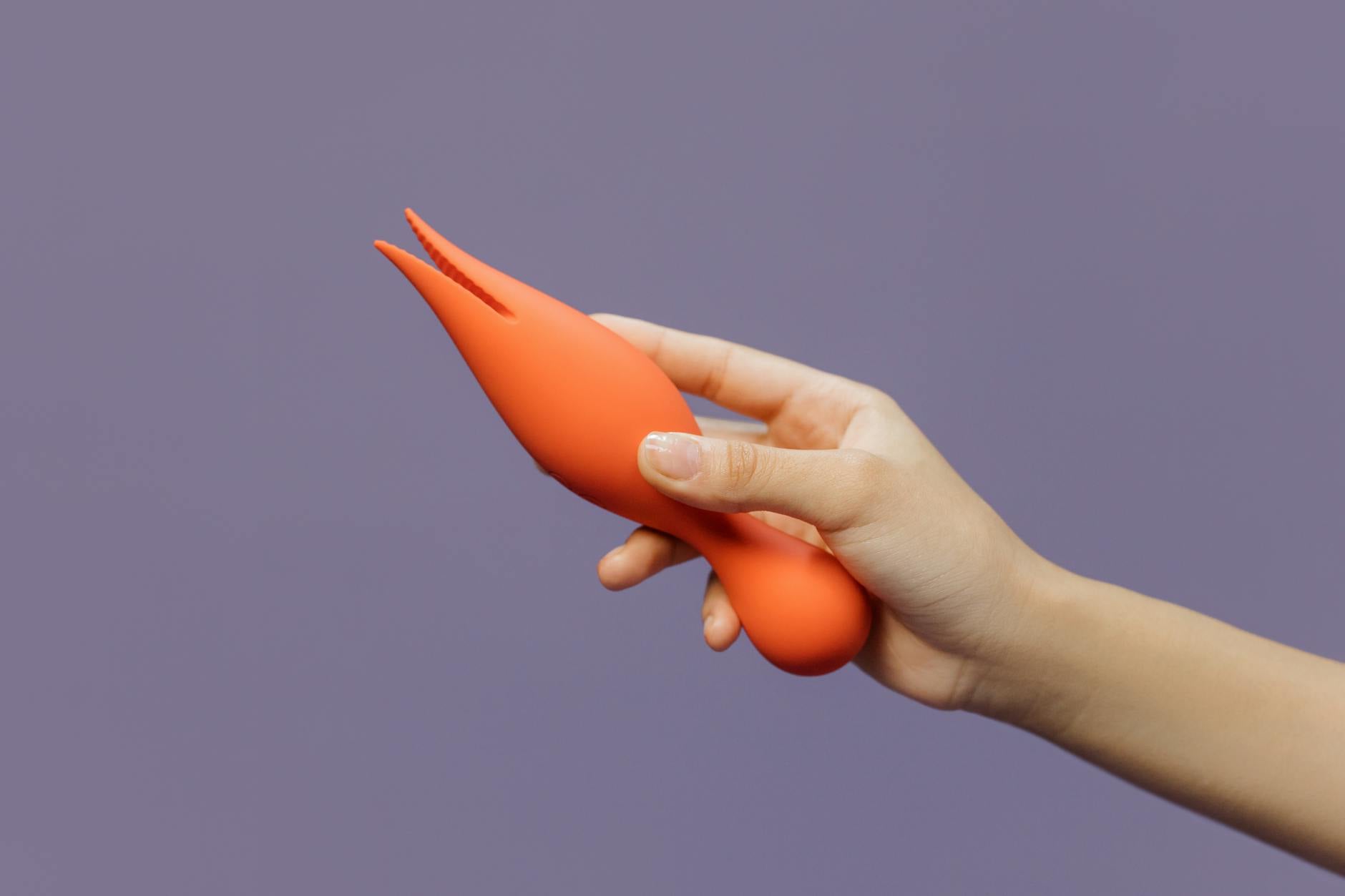
Air-suction vibrators like the Lem work differently. They use pulsing suction instead of buzzing friction. That distinction matters because suction stimulates nerves without the intensity that can trigger a trauma response. The sensation builds gradually. You control the pattern. You can pause anytime.
How your nervous system learns to trust pleasure again
Recovery after trauma isn't about erasing the past. It's about gradually teaching your body that this moment, right now, is safe. That happens through what's called titration in trauma therapy. You introduce sensation slowly. You pause. You notice what your body says. You move forward only when your nervous system says yes.
With a lemon vibrator, titration looks like this: start at pattern 1 or 2 (the gentlest settings). Feel what happens. Notice whether your body stays relaxed or tenses. If it relaxes, stay there for a few minutes. If it tenses, you can pause or switch off without judgment. This isn't about achieving an orgasm. It's about proving to your body that you can control what happens.
Over time, your nervous system learns: suction sensation equals safety. I can turn it off. My partner isn't pushing me. My pleasure is separate from what happened. That learning is what opens the door back to sensation.
Practical steps for the first time using a clitoral vibrator after trauma
Honestly, the first time matters. If you set yourself up poorly, you reinforce the pattern of sensation feeling unsafe. Here's how to actually do this:
1. Pick the right setting before you start. Don't use vibration patterns or intensity levels that match "normal" pleasure. Forget normal. Choose pattern 1 on the Lem and commit to staying there until your body tells you to explore more. That might be three sessions from now. That's fine.
2. Ground yourself first. Before you turn on the vibrator, spend 2-3 minutes in your body. Notice your breath. Feel your feet on the ground. Maybe play music that makes you feel safe. The goal is to arrive in your body already calm, not trying to become calm through the vibrator.
3. Use lube generously. Trauma often makes tissue more sensitive to friction. Water-based lubricant creates a buffer between the suction and your skin, which feels less intense and more forgiving.
4. Keep one hand free. Don't hold the lemon vibrator in both hands or brace yourself with anything. Keep your other hand free so you can touch your own body, soothe yourself, or ground yourself by pressing into the mattress. This is about maintaining agency.
5. Start at the edge, not the center. Place the Lem at the outer edge of your clitoris, not directly on the tip. The sensation is softer there. You can move to the center later if it feels right, but starting there gives you an easier entry point.
6. Set a time limit, not a goal. Forget orgasm for now. Give yourself 10-15 minutes and decide in advance that the goal is just to stay relaxed and notice what happens. Pressure to come is the opposite of what your nervous system needs.
Managing breakthrough sensations (and when to pause)
Even when you're doing everything right, something might trigger. A sensation might suddenly feel like too much. A memory might flash. Your body might tense. None of this is failure.
Here's what to do: turn off the vibrator immediately. No negotiation, no trying to push through. Your body is telling you something. Listen to it. Then sit quietly for 30 seconds. Breathe. Feel your feet. Notice that you're safe right now.
After a minute or two, you can decide what comes next. Maybe you want to try again at a lower setting. Maybe you're done for today. Both are correct answers. Recovery isn't linear, and that's not just healing wisdom. That's neuroscience. Your nervous system doesn't heal on a schedule.
The bridge between solo pleasure and partnership
If you have a partner, the conversation about using a lemon vibrator after trauma needs to happen before you start, not during. Your partner needs to understand that this is about you reclaiming your body, not about them being inadequate or left out.
A good partner will understand that watching you use the Lem is actually them supporting your healing. They might hold space. They might keep their hands to themselves. They might be there and also be quiet. The job isn't to make it feel good. The job is to make you feel safe.
Many people find that after solo healing with the Lem, they eventually want to incorporate it with a partner. That's beautiful. But there's no timeline. Some people use lemon vibrators solo forever. That's beautiful too.
Why air-suction vibrators are different for trauma recovery
The Lem's design matters here. Air-suction technology creates a gentle, rhythmic pulsing sensation rather than the intense vibration of a traditional clitoral vibrator. Your nervous system experiences this as less invasive. The suction feels more like sustained attention than stimulation overload.
The control also matters. With the Lem, you're holding the device. You're setting the pace. You're in charge of when it happens and when it stops. That control is what makes it safe for a nervous system that's learned to expect that control to be taken away.
How to know when you're ready to explore more
There's no rush here, but there are signs. Your body will tell you when it's ready to try a higher pattern, introduce more stimulation, or involve a partner. Those signs look like: you finish a session feeling relaxed rather than relieved it's over. You think about using the vibrator between sessions without panic. Your body stays soft and relaxed throughout, instead of tensing and releasing.
When those things happen, you can gently experiment. Try pattern 2. Notice what shifts. You might stay there for weeks. That's healing. You're literally retraining your nervous system to process pleasure as safe.
Recovery after trauma is often framed as getting back to normal. But actually, it's learning to build something better than normal. A version of pleasure that's grounded in your own agency, your own pace, your own body. The Lem is just a tool. You're the expert on what safety actually means.
People also ask
Can using a vibrator re-traumatize me?
It can if you push too hard too fast. The key is starting slow and respecting what your body tells you. If at any point sensation feels unsafe, you stop. There's no penalty for pausing. Your nervous system isn't broken. It's protecting you. The goal is to gradually prove to it that pleasure can be safe, and that takes time.
Should I see a trauma therapist before using a lemon vibrator?
It's not required, but it helps. A trauma-informed therapist can help you understand your specific nervous system responses and give you tools for grounding yourself during moments of activation. If you've experienced recent or severe trauma, having that support running parallel to your pleasure reclamation is wise. If you're just starting to feel ready to explore pleasure again, you can also move forward with patience and self-awareness.
Is it normal for my body to feel numb when I first try a vibrator after trauma?
Completely normal. Numbness is another protection strategy your nervous system uses. When sensation feels too risky, your body literally dampens the signals. This often resolves on its own as you consistently prove to your nervous system that the vibrator is safe. But if numbness persists for months, talking to a trauma therapist or pelvic floor physical therapist can help identify whether there's additional nervous system work needed.
Can my partner be present when I use the Lem if we're working through trauma together?
Absolutely, but it needs to be intentional. Your partner should understand that their job is to hold space, not to direct or guide. No commentary. No touching unless you ask. Just presence. Some people find this incredibly healing. Others prefer complete privacy at first. There's no right version. What matters is that you both agree on what's happening before you start.
What if I feel ashamed using a vibrator after trauma?
Shame is often part of the trauma story. You were made to feel bad about your body, your pleasure, or your boundaries. Using a vibrator is reclaiming that. It's saying: my pleasure matters. My body's right to feel good matters. I'm allowed to rebuild this. That's radical. You might feel shame anyway, especially at first. That's not a sign to stop. It's a sign that you're doing something your nervous system was taught to believe was wrong. Keep going gently.
How long does it usually take to feel comfortable with a lemon vibrator after trauma?
There's no standard timeline. Some people feel ready to explore more sensation after a few weeks. Others take months. Some people use the Lem solo indefinitely and never move to partnered pleasure. Recovery isn't a race with an finish line. It's a practice of consistently proving to your body that it's safe. That looks different for everyone.
Moving forward
Trauma changes how your body processes sensation. That doesn't mean you've lost your capacity for pleasure. It means you need to rebuild it differently. Slowly. With control. With tools designed for gentleness.
The Lem's suction technology, combined with your own nervous system intelligence, is a powerful combination. Your body knows what it needs. You're just learning to listen.
If you're ready to explore this, start small. Pattern 1. Ten minutes. That's enough. Your nervous system will tell you when it's ready for more. Until then, you're exactly where you need to be.
Have questions about your healing journey or how to move forward? Reach out to us anytime. You don't have to do this alone.