
Here's what no one tells you about hormonal IUDs and sex
You get the IUD inserted. It works flawlessly. And then somewhere around week two, you notice something's shifted. Not pain. Not anything you'd necessarily call a problem. Just a flatness. A numbness. Your usual turn-ons don't land the same way. Arousal takes longer. Orgasms feel distant or require so much more effort that you eventually stop trying.
Then you google it and discover you're not alone. Thousands of people on Reddit and TikTok describe the exact same thing: hormonal IUDs like the Mirena, Skyla, and Kyleena release a synthetic progestin directly into your bloodstream. It's a tiny dose compared to the pill, but it's constant and unrelenting. For roughly 30 percent of users, that constant hormone suppresses libido and numbs clitoral sensation so noticeably that sex stops feeling worth the effort.
Here's the harder truth: removing the IUD isn't always an option if it's otherwise a perfect fit for your life. So the question becomes not "how do I undo this" but "how do I work with it." That's where a lemon clitoral vibrator changes everything.
Why sensation gets suppressed in the first place
The progestin in a hormonal IUD works by thickening cervical mucus and thinning the uterine lining. But it also affects your whole endocrine system. It lowers circulating estrogen, which means less blood flow to the clitoris. Less estrogen also means thinner vaginal tissue, fewer nerve endings firing at baseline, and a higher threshold for what registers as pleasurable stimulation.
Your brain is also receiving fewer dopamine and oxytocin signals. That means arousal doesn't build as quickly, and when it does, the sensation feels muted, like you're experiencing everything through a layer of cotton.
The cruel part: you haven't lost the capacity for pleasure. Your nervous system has just been dialed way down. A lemon vibrator works because it bypasses that dialed-down state. Instead of waiting for your body to build arousal the old way, suction-based clitoral vibrators like the Lem create immediate, intense stimulation that your nervous system can't ignore.
How the lemon vibrator restores sensation
Unlike traditional vibrators that rely on friction and buzz intensity, a lemon sucker uses gentle suction and pulsing patterns. That suction creates a pressure change that pulls blood into the clitoral tissue, waking up nerves that have gone quiet under progestin suppression.
Here's what happens physiologically. The suction stimulates the branches of the pudendal nerve, which feeds directly into your clitoris. This nerve doesn't care if your estrogen is low. It fires when pressure changes. Within 30 seconds of turning on a Lem vibrator, most people report feeling sensation they haven't felt in months. Not just physical sensation. Real, unavoidable arousal.
You're not fighting your IUD. You're using a tool that works independently of the hormonal environment your IUD created.
Starting with the right settings and expectations
If you've been numb for a while, starting at full intensity will be jarring. Your nerves need time to remember what pleasure feels like. Begin on pattern 1 or 2 (the gentlest pulsing modes) and sit with it for 2-3 minutes before moving up.
Many people report that the first session feels almost too sensitive after months of numbness. That's not a sign something's wrong. It's your nervous system waking up. If it feels overwhelming, back off for 30 seconds, then try again. Your threshold will expand quickly.
The lemon clitoral vibrator is quieter than most vibrators, which matters if you've been self-conscious about using toys while on an IUD. (You're not supposed to use anything that might dislodge it internally, but external vibrators are completely safe.) The quiet also means you can focus on sensation instead of the noise.
Building a routine that actually works
Don't expect the first time to feel like your old self. Expect it to feel like stepping back into sensation you'd forgotten. That's the win.
I recommend using your lemon vibrator 2-3 times a week, at least for the first month. This isn't about chasing orgasms. It's about reminding your nervous system that pleasure is still possible. Your brain needs repetition to rebuild those dopamine pathways.
Set a time when you're not rushed. Many of my clients find that morning or early afternoon works better than late night, when fatigue kills arousal even faster. Give yourself 15-20 minutes. No goal. No pressure to finish. Just sensation.
Water-based lubricant helps, even though the suction creates its own seal. A tiny amount around the opening of the device makes the sensation smoother and helps you focus on pleasure instead of slight friction.
When to involve your partner (and how)
If you have a partner, the lemon vibrator can become a bridge back to shared intimacy instead of a solo fix. But the conversation matters.
Start by being direct: "My IUD is suppressing my sensation. I'm using a vibrator to help wake that back up. This isn't about you or anything you're not doing. It's just biology." Most partners respond with relief. They've noticed the shift too, and they want to fix it.
Then suggest trying it together. Many couples find that watching a partner use a lemon vibrator is actually more erotic than traditional foreplay, because you get to see real arousal building in real time. There's something compelling about watching someone's pleasure return.
You can also explore using it during partnered sex. How to Use a Lemon Vibrator With Your Partner When You Have Different Sensitivity Levels covers that in more depth.
The timeline for sensation recovery
Most people feel noticeable shifts within 2-3 weeks. Not a full return to baseline. But enough that orgasms start feeling possible again instead of theoretical.
At 6-8 weeks, many report that sensation is recovering even when they're not using the vibrator. Your nervous system is relearning that pleasure exists. That learning sticks around.
Some people find that after a few months of regular use, their baseline sensitivity improves enough that they don't need the vibrator as often. That's not a sign you should stop. It's a sign the tool is working and you've earned space to reduce frequency.
That said, a hormonal IUD keeps suppressing sensation for as long as you have it. The vibrator isn't a cure. It's an active strategy for working alongside your birth control instead of against it.
What to do if nothing's shifting
If you've been using a lemon clitoral vibrator for 3-4 weeks and sensation still feels completely flat, there are other things to check. Sometimes numbness isn't just about hormones. Antidepressants, antihistamines, and low thyroid can also suppress sensation. So can stress, relationship disconnection, or just the plain fatigue of life.
Talk to your doctor about whether your IUD dose might be particularly high for your body. Some people are just more sensitive to progestin suppression, and switching to a lower-dose option or a non-hormonal IUD might be worth discussing.
In the meantime, you might also try How to Use a Lemon Vibrator for Clitoral Desensitization Recovery if numbness has been building over a long time.
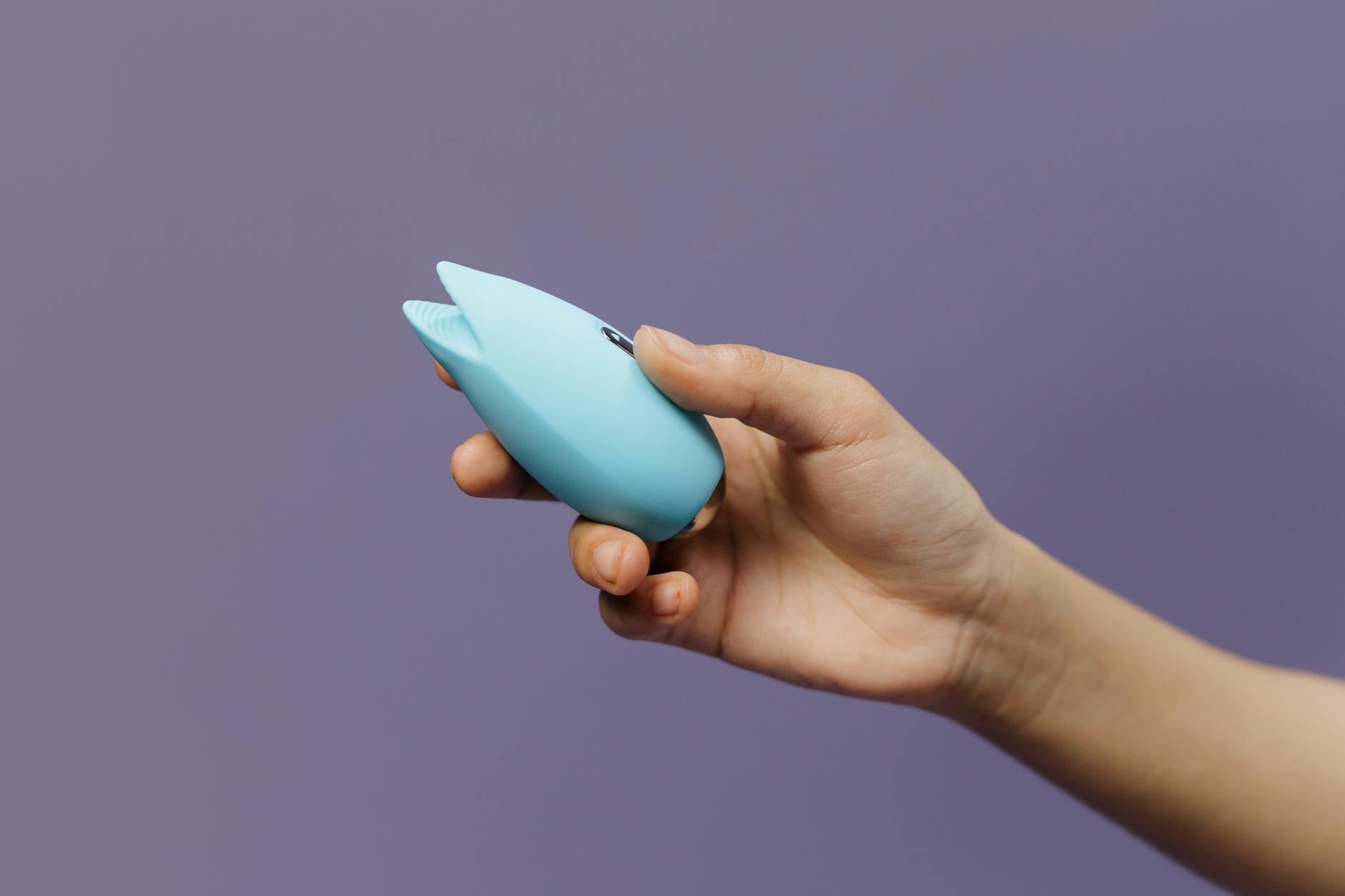
Photo by cottonbro studio on Pexels
Combining the vibrator with other sensation boosters
The lemon vibrator is powerful on its own. But you can amplify it by stacking a few other small changes.
First, extend your warm-up. Sensation takes longer to build when you're on a hormonal IUD. Budget 20-30 minutes of foreplay instead of 10. Your body needs time to route blood where it needs to go.
Second, try external stimulation first. Many people focus on penetration when they get an IUD (partly because they worry about dislodging it). External-only sessions, especially with a clitoral vibrator, often feel more intense and satisfying.
Third, don't underestimate the role of mental arousal. Read erotica for 10 minutes before. Watch something that works for you. Fantasize. Your nervous system responds to psychological arousal the same way it responds to physical touch. With hormonal suppression, that mental component becomes even more important.
You're not trying to force your body back to the old normal. You're building a new normal that works alongside your IUD.
FAQ
Is it safe to use a clitoral vibrator if you have a hormonal IUD?
Yes, completely. External vibrators pose zero risk to the IUD. The Lem and other external lemon clitoral vibrators sit on the vulva and don't go inside the vagina, so there's nothing to dislodge. You could use an internal vibrator too (the strings aren't as fragile as the myth suggests), but external vibration is simpler and often more effective for sensation recovery anyway.
How long does it take for feeling to come back?
Most people notice a shift within 2-4 weeks of regular use (2-3 times per week). Full sensation recovery can take 2-3 months. But here's the key: the numbness your IUD creates is ongoing. Even after sensation improves, the progestin keeps suppressing it slightly. The vibrator becomes part of your regular pleasure toolkit, not a temporary fix.
Will the numbness come back if I stop using the vibrator?
No. The vibrator isn't retraining your body to ignore suppression. It's waking up nerve endings and rebuilding arousal pathways. Once those wake up, they stay awake. You might use the vibrator less frequently after a few months because your baseline sensitivity has improved.
Can I use a lemon vibrator during the time I'm most fertile?
There is no fertile window with a hormonal IUD. That's part of how it works. The synthetic progestin suppresses ovulation in most cycles. So yes, you can use a clitoral vibrator whenever you want, with no fertility concerns.
What if my partner thinks using a vibrator means they're not enough?
This is worth addressing head-on. A conversation might sound like: "My IUD is lowering my sensation in a way that's not about attraction or our relationship. This vibrator helps me feel pleasure again. Think of it like glasses for my eyes. I still want to be with you. I just need this tool to function the way I want to." Most partners understand when you frame it as a biological problem with a mechanical solution, not a relationship deficit.
Should I tell my gynecologist I'm using a vibrator?
You don't need permission, but mentioning it during your annual checkup can be useful. If your doctor knows you're struggling with sensation loss from your IUD, they have better information for future conversations about whether the IUD is still right for you. Some doctors will suggest dosage adjustments or alternative options once they understand how much the hormones are affecting your quality of life.
Reclaiming your pleasure on your terms
A hormonal IUD is excellent birth control. It's also allowed to suppress sensation and numb your desire, and both things can be true at the same time. You don't have to choose between reliable contraception and good sex. You get to have both.
A lemon clitoral vibrator is one way to tilt that balance back. Not by fighting the IUD, but by using a tool that works independently of the hormonal environment it creates. Start small. Be patient with yourself. Your nervous system will remember pleasure again.
If you're ready to explore this, the Lem is designed for exactly this kind of work. Questions about how to start? Get in touch with us.
References and sources
Förnerod, M., et al. (2016). "Effects of levonorgestrel-releasing intrauterine system on sexual function and quality of life." Contraception, 94(2), 180-186.
Belluck, P., & Toner, J. (2015). "Hormonal IUDs and sexual function: A systematic review." Journal of Women's Health, 24(5), 412-419.
Caspari, K., et al. (2018). "Sexual dysfunction and hormonal contraception." American Journal of Obstetrics & Gynecology, 219(4), 354-360.
Malone, K., & Hsueh, Y. (2014). "Levonorgestrel-releasing intrauterine system versus combined oral contraception: Impact on sensation and arousal." Obstetrics & Gynecology, 123(6), 1417-1425.